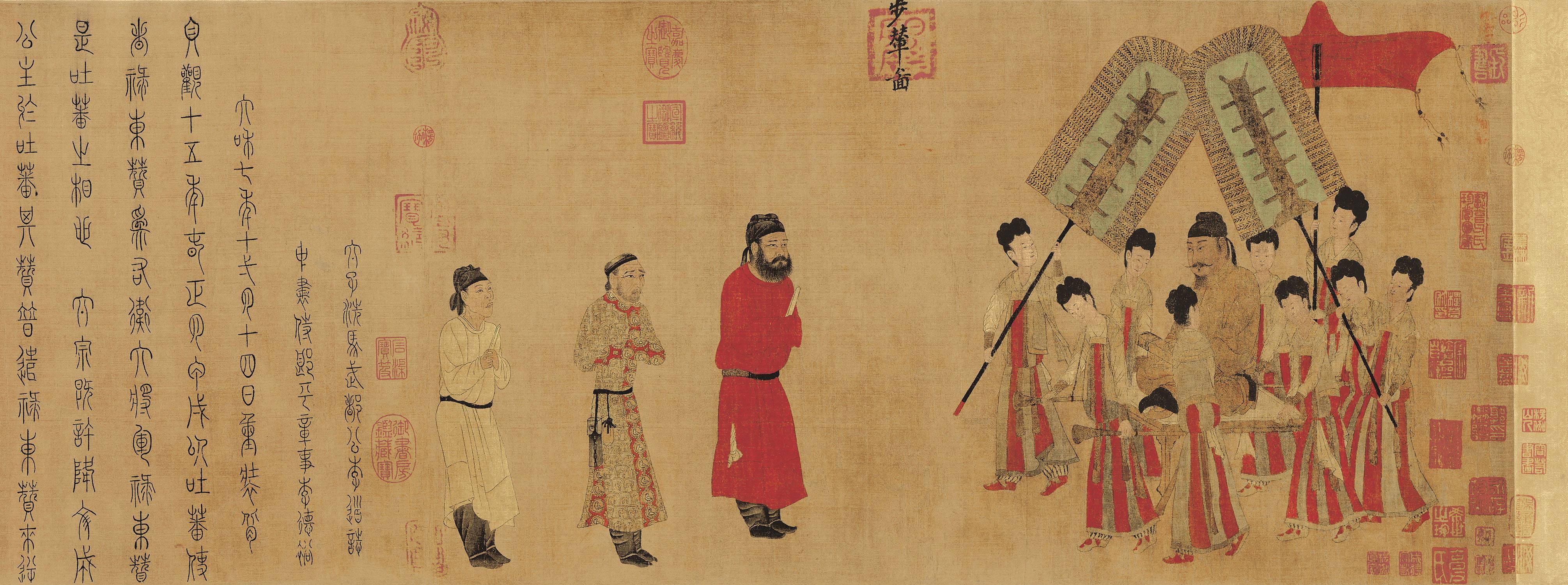
Emperor Taizong Receiving the Tibetan Envoy
Introduction
Emperor Taizong Receiving the Tibetan Envoy is a celebrated historical painting attributed to Yan Liben, a prominent artist and official of the Tang Dynasty. This masterpiece, also known as Bunian Tu, captures a significant diplomatic event during the Tang period, highlighting the meeting between Emperor Taizong and the Tibetan envoy, Gar Tongtsen Yulsung. The painting is frequently associated with the historical narrative of the marriage alliance between the Tang Dynasty and the Tibetan Empire, which was then ruled by Songtsen Gampo. Currently housed in the Palace Museum in Beijing, the work is regarded as one of China's most treasured ancient paintings and is often included in the list of "Ten Great Chinese Paintings."
Historical Background
The painting's historical context is rooted in the seventh century when the Tibetan Empire, under the rule of Songtsen Gampo, sought a closer alliance with the Tang Dynasty. In 641, Songtsen Gampo dispatched an envoy to the Tang court in Chang'an (modern-day Xi'an) with the proposal of a marriage alliance. Emperor Taizong consented to the proposal, leading to the marriage of Princess Wencheng to Songtsen Gampo. This alliance not only represented a significant diplomatic gesture but also facilitated cultural and economic exchanges between the two regions. The marriage brought Tang customs, rituals, and a retinue of craftsmen to Xizang, influencing the development of Tibetan culture and economy. The relationship between the Tang Dynasty and Xizang was thus strengthened, marking a period of mutual cooperation and cultural integration.
Description of the Painting
Emperor Taizong Receiving the Tibetan Envoy is a silk scroll painting measuring approximately 1.3 meters in length. The artwork depicts the formal reception of the Tibetan envoy by Emperor Taizong, capturing a moment of diplomatic significance. The painting is known for its detailed representation of the figures, attire, and expressions, showcasing the sophisticated artistic techniques of the Tang Dynasty. The composition is carefully balanced, with the emperor seated in a dignified pose, surrounded by his courtiers, while the Tibetan envoy, Gar Tongtsen Yulsung, stands respectfully before him. The painting reflects the grandeur of the Tang court and the importance of the diplomatic mission. The use of color, line, and spatial arrangement in the painting illustrates the artist's skill in conveying both the ceremonial aspect and the underlying political significance of the event.
Artistic Significance
Yan Liben, the artist attributed to this masterpiece, was renowned for his ability to depict historical and political subjects with great accuracy and artistic flair. His work is characterized by a refined and precise style, which captures the essence of the figures and their surroundings. Emperor Taizong Receiving the Tibetan Envoy is a testament to Yan's mastery of portraiture and his understanding of the socio-political climate of his time. The painting's inclusion among the "Ten Great Chinese Paintings" underscores its artistic value and enduring legacy in Chinese art history. The work exemplifies the Tang Dynasty's artistic achievements and provides insight into the diplomatic relations and cultural exchanges of the period. It stands as a significant cultural artifact that continues to be appreciated for its aesthetic and historical importance.
Symbolism and Themes
The painting embodies several key themes, including diplomacy, cultural exchange, and unity between diverse regions. The artwork emphasizes the theme of political harmony, as it illustrates the successful negotiation and alliance between two powerful entities. Through its symbolism and thematic depth, Emperor Taizong Receiving the Tibetan Envoy transcends its immediate historical context, offering a broader commentary on the value of intercultural relationships and the role of diplomacy in shaping history.








